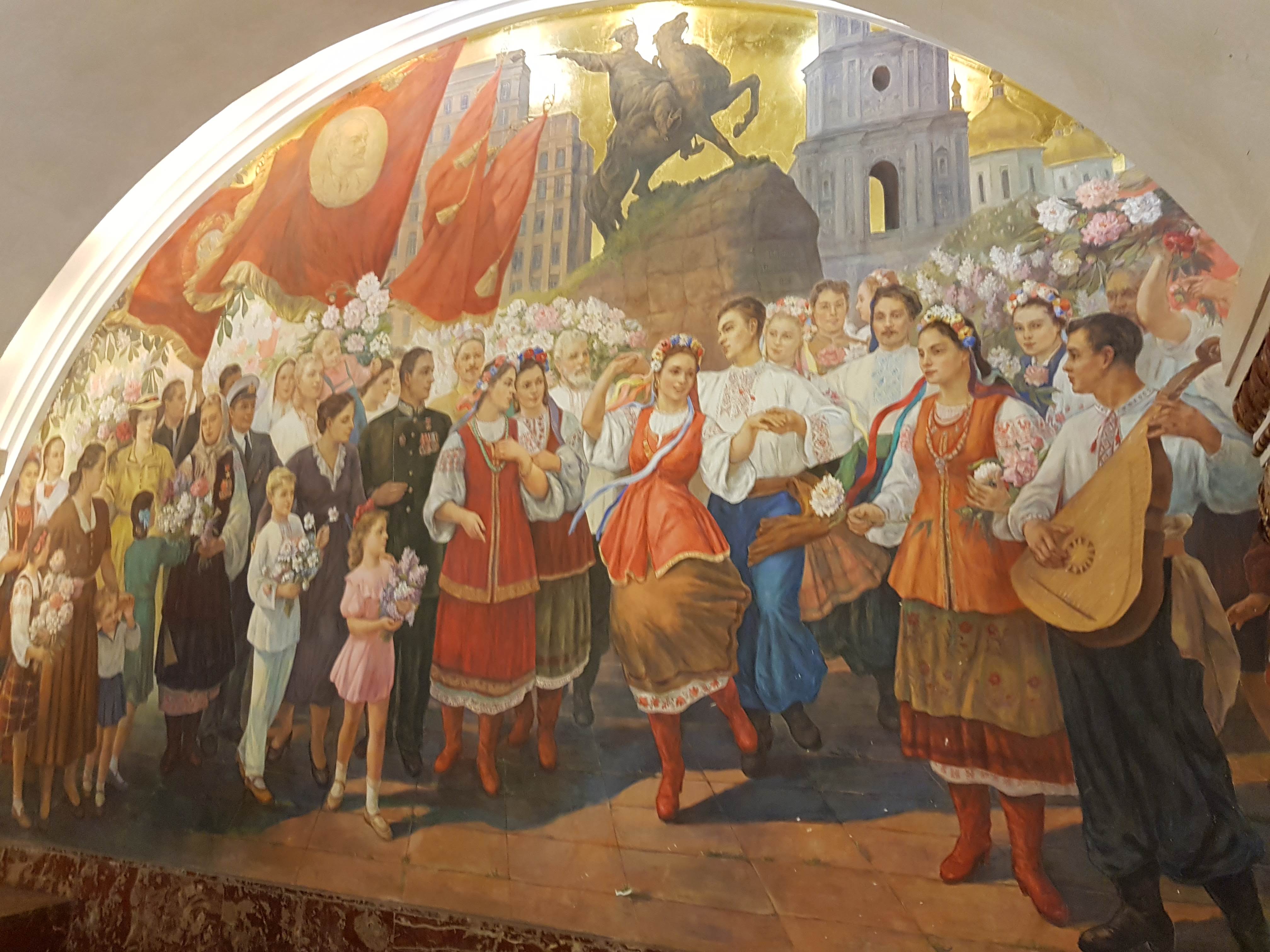
A day on the Moscow Metro was more like a history lesson than a ride on yet another train.
For many of us, daily commuters around the world on trains, or if you are lucky on the metro, it means going from one drab station to the next. We are surrounded by too many uncomfortable, impatient bodies. There is not enough time as we try to get to work or home. But on the Moscow Metro, taking the metro is like walking through a national heritage site.
Depending on where you get off, you’ll receive a crash course in such diverse architectural movements as Baroque, Art Deco or Futurism, and face stained glass windows, marble columns, crystal chandeliers, gilded mosaics and painted scenes from Russian history.
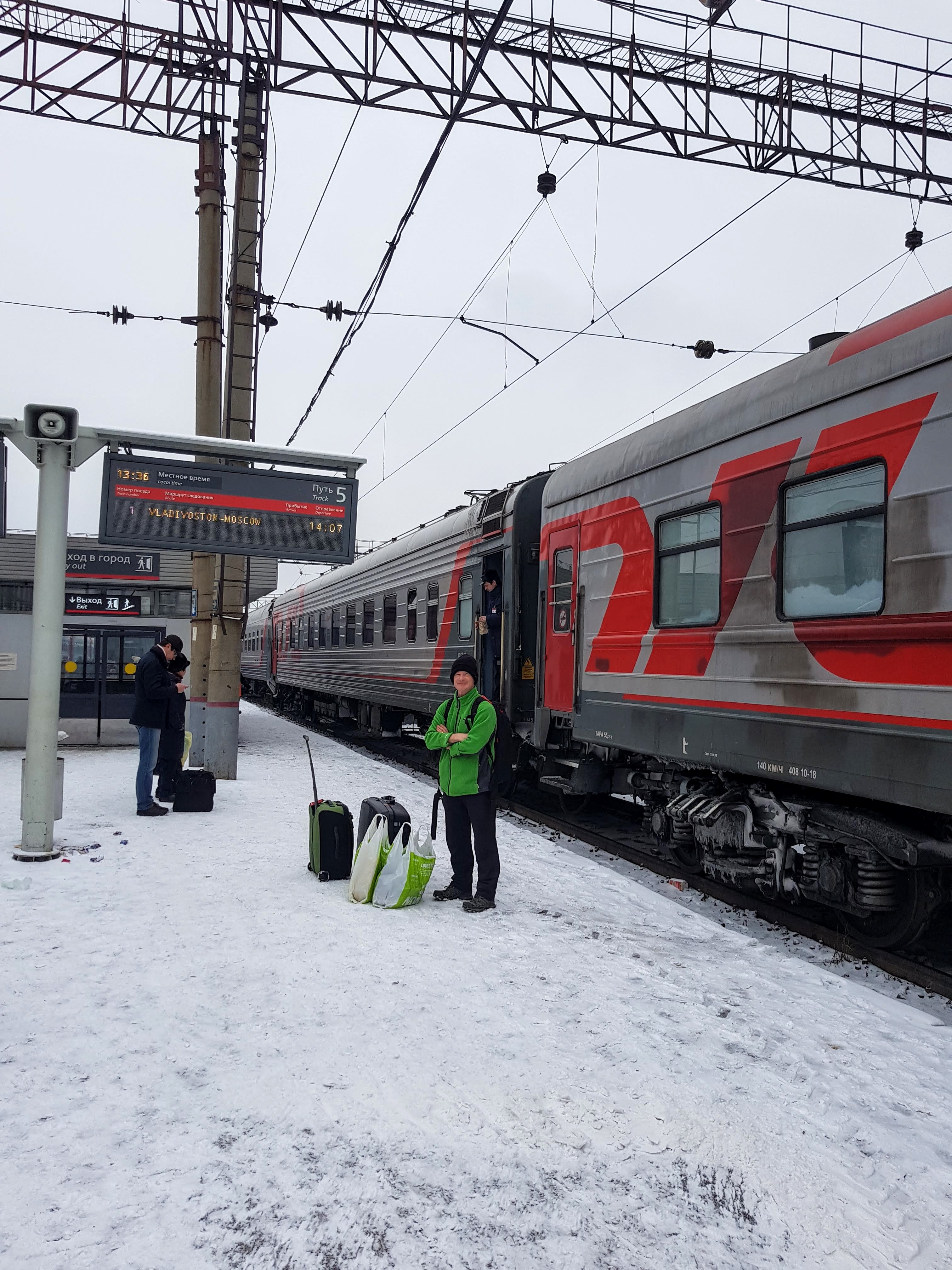
We had finally arrived in Moscow, the current capital of the Russian Federation.
Arrival was eventful, but more on that later. We arrived in Moscow 32 days after departure from Hong Kong.

We arrived in Moscow the day before my birthday. My birthday gift was going to be worth NZD 0.80 per person for the whole day. Yes, you read it right. It cost us NZD 0.80 per person to ride the Moscow metro for the day. One of the best birthday gifts ever for a train geek.
We started early in the morning. The morning commute had finished around 9 am. This timing gave us more time to look at each metro station.
Each metro station really needs to be discovered. They are really beautiful and a piece of art in their own right.

My favourite stations, which you should definitely visit:
1. Komsomolskaya (Line 5)
2. Belorusskaya (Line 5)
3. Novoslobodskaya (Line 5)
4. Park Pobedy to see and ride the longest escalator in the world (Line 3)
5. Elektrozavodskaya (Line 3)
6. Mayakovskaya (Line 2)
7. Ploshchad Revolyutsii (Line 3)
8. Arbatskaya (Line 3)
Komsomolskaya Metro Station

Metro signs are all in Russian

The metro station sign in Russian “Комсомо́льская”
The Komsomolskaya Station, opened in 1952, is one of the busiest stations in the Moscow Metro system. It was designed by architects A. D. Minkushev and L. A. Voronin; it’s a great example of Stalinist architecture with its grand halls, mosaics, and sculptures. Don’t miss the stunning chandelier in the central hall!

The ceilings

The design theme is the Historical Russian fight for freedom and independence. This theme is expressed in eight large ceiling mosaics by Pavel Korin. Korin said the inspiration came from Joseph Stalin’s speech at the 1941 Moscow Parade. In that speech, he urged soldiers to remember the heroics of their Russian forefathers. This call was made amid catastrophic losses in the early years of World War II. Soldiers were asked to recall the historical heroics.

The far end of the station above the Lenin Bust

The Chandeliers are a must at this station to see for oneself.

In 1951, both Pavel Korin and Alexey Schusev were posthumously awarded the Stalin Prize for their work on the station. On 30 January 1952, the station was opened to the public.
Belorusskaya metro station
Belorusskaya metro station is named after the Belorussky Railway Station located above. It was opened in 1952. The station is decorated with Belarusian motifs adorning its ceiling, light fixtures and marble pylons. The 12 mosaics on the ceiling also depict scenes of Belarusian life.

The metro station sign in Russian “Кольцевая линия”

The ceiling of the Belorusskaya metro station.


The mosaics in the ceiling

Novoslobodskaya metro station
This metro station was built as “Palaces for the People”. It was designed to awe and inspire Stalin’s subjects, constantly keeping them looking upwards in admiration of the Soviet Union.

Interestingly enough, the Novoslobodskaya Station is composed of 32 glass panels. These panels symbolise peace. They were created by a group of artists from Latvia, not by Russians.


At the end of the central hall, there is a large, full-wall panel “World Peace” of a happy mother with a child in her arms. The woman was found to resemble the wife of the station’s architect.

Park Pobedy

Park Pobedy metro station or Парк Победы in Russian.
At 84 metres (276 ft) underground. It is the deepest metro station in Moscow and one of the deepest in the world.
We had to see this metro station as we had been to some of the world’s longest escalators in the world already in Hong Kong. It contains the longest escalators in Europe, each one is 126 metres (413 ft) long and has 740 steps. The escalator ride to the surface takes approximately three minutes. Nevertheless, to say I was scared, as I don’t like heights at the best of times.
Mayakovsky Metro Station

Mayakovskaya or Маяковская in Russian is a Moscow Metro station on the Zamoskvoretskaya Line, in the Tverskoy District of central Moscow, Russia.
It is considered to be one of the most beautiful stations in the Moscow Metro system. It is a fine example of pre-World War II Stalinist Architecture and one of the most famous Metro stations in the world.
Ploshchad Revolyutsii Metro Station

The station is on the Arbatsko-Pokrovskaya Line. It is named after Revolution Square under which it is located.

The station contains 76 statues in the socialist realism style. Originally, 80 sculptures were created for the space—10 pairs, each replicated 4 times throughout the station.

Each arch is flanked by a pair of bronze sculptures. These sculptures depict the people of the Soviet Union, including soldiers, farmers, athletes, writers, aviators, industrial workers and schoolchildren. The sculptures are meant to symbolise Russia’s transformation from the Pre-revolutionary past into the (then) contemporary era.


Arbatskaya Metro Station
The old Arbatskaya metro station had been damaged in a German bomb attack in 1941, so its replacement was much deeper and included larger station that could double as shelters (especially in the event of nuclear attack).


Since it was meant to serve as a bomb shelter as well as a Metro station, Arbatskaya is both large (the 250-m platform is the second-longest in Moscow) and deep (41 m underground). The main tunnel is elliptical in cross-section, an unusual departure from the standard circular design. The station features low, square pylons faced with red marble and a high vaulted ceiling elaborately decorated with ornamental brackets, floral reliefs, and chandeliers.

A pretty nice bomb or nuclear attack station if you ask me.
Hope you enjoyed this blog. It is such a shame Russia is currently closed to tourists. It was such an awesome day.
Made with love for the open road,
Rolanda

The Moscow Metro transforms commuting into a historical experience, showcasing stunning architecture and art. Each station reflects diverse styles and rich Russian history, with must-see spots like Komsomolskaya, Belorusskaya, and Park Pobedy. The journey offers a unique blend of cultural insights, making it an unforgettable visit in the heart of Moscow.












Leave a Reply